What Is the Difference Between Paper Weights and Coatings in Printing?
- ganderson29
- Feb 10
- 3 min read
Updated: Feb 12
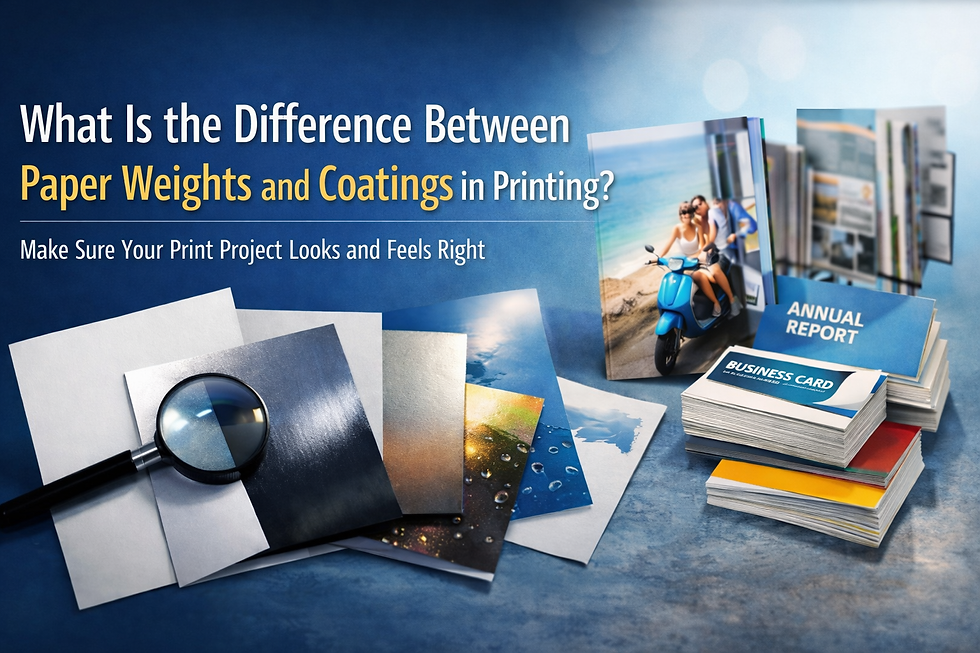
When people order printed materials, they often focus on the design and message. The paper itself is usually an afterthought. That is where many print projects run into problems. Paper choice affects how a piece looks, feels, holds up, and how professional it appears to the person receiving it.
Paper decisions are not technical details. They directly influence perception and performance. Most issues arise from misunderstandings of two things: coatings and weights.

Why Paper Coatings Matter First
Coatings are usually what people notice first. They affect shine, color, texture, and durability. In most print projects, the coating decision comes before the paper weight.
Uncoated Paper
Uncoated paper has a natural, matte surface with no finish applied. It absorbs ink into the paper fibers, which creates softer colors and minimal shine.
Uncoated paper is commonly used for letterhead, forms, envelopes, notepads, and any document that requires writing. It is chosen for its readability, practicality, and understated, traditional look.
Gloss Coated Paper
Gloss paper has a shiny, reflective surface that keeps ink on the surface rather than absorbing it. This results in sharper images and more vibrant colors.
Gloss coating is most commonly used for brochures, marketing flyers, promotional postcards, and photo-heavy materials. Brochures almost always use a gloss-coated text paper because it enhances color, improves image clarity, and still folds cleanly. The gloss finish is a major reason brochures look polished and professional.
Gloss paper is not ideal for writing and can show fingerprints with heavy handling, but it delivers a strong visual impact.
Satin or Matte Coated Paper
Satin or matte coatings fall between uncoated and gloss. They reduce glare while still improving color reproduction compared to uncoated paper.
This finish is often used for corporate brochures, menus, annual reports, and professional marketing materials where readability and appearance both matter. Satin coatings offer a refined look without the shine of gloss.
UV Coating
UV coating is a clear, glossy finish that is cured with ultraviolet light. It creates a smooth, protective surface on the paper.
UV coating is commonly used on business cards, postcards, and high-impact promotional pieces. It adds durability and helps protect against scuffing and moisture. In some cases, UV coating is applied only to specific areas, such as logos or headlines, to draw attention.

How Paper Weight Supports the Coating and Use
Once the coating is chosen, paper weight becomes easier to understand. Weight determines how stiff or flexible the piece feels and how it handles and mails.
Text Weight Paper
Text-weight paper is thinner and more flexible. Common options include 60 lb, 70 lb, and 80 lb text.
Text paper is used for flyers, brochures, booklets, letterhead, and multi-page documents. For brochures in particular, text-weight paper paired with a gloss coating allows the piece to fold easily while still looking sharp and professional.
Cover Weight Paper
Cover-weight paper is thicker and more rigid. It is used when structure and durability are important.
The most common cover weights are 130 lb cover, 100 lb cover, and 80 lb cover.130 lb cover is typically used for premium business cards and pieces that need a substantial, high-quality feel.100 lb cover balances durability and cost and is widely used for postcards and marketing pieces.80 lb cover is lighter and used when flexibility or mailing requirements matter.
Cover stock helps a piece hold its shape and withstand repeated handling.

How Paper Choices Are Actually Made
Most print projects start with how the piece should look and be handled. Coating decisions usually come first because they affect appearance and feel. Paper weight is then selected to support the coating, folding, durability, and mailing needs.
Paper is part of the message. Choosing the right combination of coating and weight ensures the final piece performs as intended and reflects the level of professionalism you want to present.
If the paper choice feels confusing, that is normal. A short conversation with a print expert helps avoid mistakes and ensures the finished piece works in the real world, not just on screen.
Find this article interesting? Sign up to receive them by email. No Spam!

Minuteman Press Castle Rock
1263 Park St. Unit B
Castle Rock, CO 80109
303-688-5692